w " WHY DOES COLOUR OF SUN CHANGE ? Skip to main content

How to make 1N and 1M H2SO4 ?

Now let's see how to make 1 N and 1M  H2SO4 from 98% concentrated H2SO4 . This calculation varies with concentration of H2SO4. Because density varies with concentration of H2SO4 . Now we are having density 1.84 for 98% concentrated H2SO4.  If you are going to use less concentrated H2SO4 then first find out density of it then put that value in below formula instead of 1.84 H2SO4 is liquid, so at first we need to convert H2SO4 molecular weight (gm) into volume (ml) let's use formula density = mass / volume volume = mass of HCl  / density                             98.08 / 1.84 V = 53.30 ml Here we are making 1M and 1N  H2SO4 from 98% concentrated H2SO4. If you are going to use less concentrated H2SO4 then use that percentage value in below formula rather than 98%. Let's use formula  1M H2SO4 (98%) =  53.30 ml [ V ]                100%  ...

WHY DOES COLOUR OF SUN CHANGE ?

  When we see the sun in midday it looks yellow but at the sunset it looks red. do you know why.
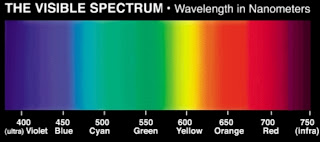
          
      If you wants know that, you must know range of visible region


Why sun looks yellow in midday ?

Sun looks yellow in midday because, blue, violet colours have low wavelength but high frequencies, because of that, they scatter in all direction and sky looks blue. That means we just have to consider remained yellow, orange and red colours . This three colours  have low frequencies but high wavelengths, as compare to blue and violet colour . that is why they easily reach to earth surface.   


    There are three colours eventhough sun looks yellow because if we compare just these three colours, then we can understand orange and red colours have high wavelengths and low frequencies. But yellow colour has low wavelength and high frequency  as compare to red and orange colours.
The main point is , distance between sun and earth is slightly less in the midday. 


It means both red ,orange and yellow 
Colours have sufficient wavelength to reach on earth surface but yellow colour has high frequency and scattering ability as compare to red and orange colours. 

Just because of that high frequency and high scattering of yellow colour than red and orange colours, sun looks yellow in midday. 

Why sun looks red at the sunset ?
    At the sunset distance between sun and earth always greater than midday. 


        red colour of sun is totally depend on wavelengths of colours. Red colour has high wavelength than orange and yellow and others. Here is no matter about frequencies because in the evening distance between sun and earth is slightly more as compare to midday. Just long wavelength colour can reach to earth surface. Red and orange colours have high wavelengths that is why sun looks red and slightly orange, and Also its nearest area looks red and orange. Remained yellow colour has low wavelength but high frequency than red and orange colours hence sometimes surroundings area of sun looks slightly yellow coloured. And other colours like violet and blue are the responsible for the colour sun


Comments

Popular posts from this blog

How to make 1N and 1M H2SO4 ?

Now let's see how to make 1 N and 1M  H2SO4 from 98% concentrated H2SO4 . This calculation varies with concentration of H2SO4. Because density varies with concentration of H2SO4 . Now we are having density 1.84 for 98% concentrated H2SO4.  If you are going to use less concentrated H2SO4 then first find out density of it then put that value in below formula instead of 1.84 H2SO4 is liquid, so at first we need to convert H2SO4 molecular weight (gm) into volume (ml) let's use formula density = mass / volume volume = mass of HCl  / density                             98.08 / 1.84 V = 53.30 ml Here we are making 1M and 1N  H2SO4 from 98% concentrated H2SO4. If you are going to use less concentrated H2SO4 then use that percentage value in below formula rather than 98%. Let's use formula  1M H2SO4 (98%) =  53.30 ml [ V ]                100%  ...

How do you prepare 1M or 1N hcl ?

±  How to make 1 Molar or 1 normal hcl In case of HCL molarity & Normality is same Because- Because HCL = H+ + CL-  HCL contain only one H+ ion means Basicity Of HCL is = n = 1  Normality = molarity  × n   n =  [Basicity of HCL ]  N= M×1   So  N = M (That is why in case of HCL Normality & molarity is same ) Now let's see how to make 1 N or 1M  HCL from 37% concentrated HCL This calculation varies with concentration of HCL. Because density varies with concentration of HCL . Now we are having density 1.18 for 37% concentrated HCL.  If you are going to use less concentrated HCL then first find out density of it then put that value in below formula instead of 1.18. HCL is liquid, so at first we need to convert HCL molecular weight (gm) into volume (ml) let's use formula density = mass / volume volume = mass of HCL   / density                           ...

Why Birds don't get Electrocuted on Power Cables?

        E lectricity is the flow of electrons through conductors . It always takes the easiest route, i.e., electricity always flows through a path of least resistance .      electricity flows are made of copper . Copper offers least resistance and is a very good conductor of electricity. However, the bird's body offers greater resistance and is not a good conductor as copper. Hence, electricity ignores the bird and flows through the cables and birds don't get electrocuted.      B esides this, electricity flows from its highest potential to its lowest potential . Now, the power cables usually run at different potentials. If bird's feet are on the same power cable, then they are at same potential. Thus, the bird doesn't get electrocuted. However, when the bird touches two cables with different potentials at the same time, then electricity will flow through the bird to go to the other cable with lower potential and the bird will get elec...